Thursday, July 11, 2013

Dental Myths Busted by Dental Implants Specialists in Arizona, PART 2

This four-part article series sets about explaining and dispelling the many common myths and misconceptions surrounding oral health and hygiene and certain dental procedures.

Welcome back to our four-part article series in which we get dental implants specialists in Arizona to explain and bust the various myths and misconceptions surrounding oral health, hygiene and dental treatment. In our previous article post it was explained that placing a tablet of aspirin next to a tooth to relieve pain doesn’t work at all and, in fact, can actually cause acid burn to the soft tissues and tooth crown. It was also explained that bleeding gums are typically a result of infection, which, in turn, is caused by poor oral hygiene. For this reason, avoiding brushing and flossing only compounds the issue. In both cases of persistent toothache and bleeding gums, patients are urged to seek the advice of their dentist. Let’s continue looking at some more myths, shall we?

Cosmetic Dentistry Arizona

Myth # 3: Sugar causes cavities

The Facts: Before you get excited and resume your five-a-day soda habit, please note the following important distinction: sugar itself doesn’t cause cavities. Bacteria do. But, bacteria love sugar and the more you eat, the more favorable an environment for bacterial growth your mouth becomes.

“People who have a diet high in sugar tend to present with more cavities and tooth decay because it provides excellent fuel for bacterial growth,” explain dental implants specialists in Arizona. “These micro-organisms feed on the sugars left behind in your mouth after a meal and in turn produce wastes that are quite acidic. These wastes sit on your teeth and eat into the dental enamel, forming tiny holes, which widen with time to form cavities. Left untreated, cavities can provide bacteria with safe refuge from the roving bristles of your toothbrush and allow decay to progress to a point where it infiltrates the pulp chamber of the tooth. At this juncture, root canal therapy may be necessary or even tooth extraction.”

The Solution: Too much sugar is bad for you anyway, so try to limit your intake. If you do enjoy a sugary snack, treat or beverage, make sure you brush your teeth afterwards, or at the very least wash your mouth out with water. Chewing sugar-free gum is also great for your teeth.

Myth # 4: Osteoporosis only affects major bones in the body, such as your hips and spine. It doesn’t affect your teeth.

Dental Implants Arizona

The Facts: “Osteoporosis is a condition that affects the density of the bones, causing them to become brittle and fragile over time,” explain cosmetic dentistry specialists in Arizona. “It does not discriminate between the various bones in the body, so your jawbone is at just as much risk of becoming compromised if you suffer from this disease.”

The Solution: What this means for your teeth isn’t good news. Osteoporosis can cause tooth loss, so it’s vitally important that you follow the diet prescribed to you by your treating physician. The right nutrition may help you maintain proper bone support and prevent terrible problems like tooth loss.

Stay Tuned...

To read more dental myths and misconceptions join us next week for the third installment of this four-part article series, courtesy of dental implants specialists in Arizona.


Thursday, July 4, 2013

Dental Myths Busted by Teeth Implants Specialists in Arizona, PART 1

This four-part article series sets about explaining and dispelling the many common myths and misconceptions surrounding oral health and hygiene and certain dental procedures.

When it comes to your teeth, oral health and the various dental procedures out there, people are full of opinions, old wives’ tales and misconceptions. Some are harmless and even quite humorous; for example, it was believed that tying a frog to your jaw would firm up loose teeth. Granted, this belief is archaic and has long since faded. But there are other myths and misconceptions about oral health that are actually dangerous, because they perpetuate ignorance and a fear of dentists and dental treatment. So, we sat down with some teeth implants specialists in Arizona and spoke to them about the dental myths they most want to see busted. What they had to say is presented to you in this four-part article series.

Dental Myth # 1: If you’ve got toothache, put an aspirin next to it to kill the pain.

Dentures Arizona

The Facts: “Aspirin’s pharmaceutical action is to cease the production of prostaglandins, which function as pain transmitters,” explain denture specialists in Arizona. “In other words, they let your brain know which part of your body is hurting and how badly. However, the aspirin itself must first be absorbed into the bloodstream and the best and most effective way to achieve this is by ingesting it orally.”

Placing aspirin next to your tooth is not going to render it less painful. In fact, you could do serious damage. Aspirin is quite acidic and this could cause the adjacent soft tissues to become irritated and inflamed. Worse still, it could cause corrosion of your dental enamel, which could end up in further sensitivity, pain and the formation of cavities.

The Solution: “If you’ve got a persistent toothache, there is an underlying problem that needs to be treated,” explain teeth implants specialists in Arizona. “Since the tooth is a closed structure (encased by hard enamel) the chances of it healing on its own are very slim, so you should book an appointment with your dentist right away. Swallowing pain medication will only treat the symptoms. If you ignore tooth pain, you could end up losing the tooth.”

Dental Myth # 2: You shouldn’t brush your teeth if your gums bleed. You certainly shouldn’t floss!

Teeth Implants Arizona

The Facts: It’s understandable that you wouldn’t want to stress your gums by brushing or flossing them if they have been bleeding, but unlike torn skin, which one would put a Band-Aid over and leave to heal; the complete opposite is true of your gums. In order to understand this, you have to appreciate why gums bleed in the first place.

“Gums tear easily and bleed when they’ve become weakened by infection,” explain denture specialists in Arizona. “If you don’t brush and floss frequently and/or thoroughly enough, bacteria and food debris build up between your teeth and just below the gum line. This irritates the gums, causing them to become inflamed and infected, resulting in a condition we refer to as gingivitis. The compromised tissue tears and bleeds more easily.”

This explains why not brushing and flossing makes your problem so much worse!

The Solution: If your gums are bleeding when you brush them, you may very well have a bacterial infection. You will need to increase the frequency and duration for which you brush on a daily basis, as well as start flossing in the evening. You may also want to incorporate an anti-bacterial mouthwash into your daily hygiene routine. If it’s been more than a year since you’ve been to the dentist and oral hygienist, get booking!

Stay Tuned...

To read more dental myths and misconceptions join us next week for the second installment of this four-part article series, courtesy of teeth implants specialists in Arizona.

Thursday, June 27, 2013

An In-Depth Look at the Leading Cause of Tooth Loss: A Sun City Dentist Explains

This article provides an in-depth look at periodontal disease. This post explains the definition, causes, symptoms and courses of treatment for dealing with gum disease.

The statistics about general oral hygiene in America are pretty grim and the consequences thereof, even more so. In a study done amongst dental patients in the United States, nearly 60% reported that they only occasionally brush their teeth while only 16% brushed at least twice a day. The cause of tooth loss can come down to a variety of factors; however, entertaining a poor oral hygiene routine will certainly get you there quicker. The leading cause of tooth loss is periodontitis, according to a Sun City dentist, which is an acute and long term infection of the gums that gradually deteriorates the health of the bone supporting the teeth.

Periodontal Disease: A Sun City Dentist Explains

Periodontitis or gum disease is a widespread infection in the gums and the supporting structures of the teeth, which leads to tooth loss. This condition can progress to the point of teeth falling out on their own, or deemed beyond repair and must be extracted. Leaving this condition untreated can actually encourage and exacerbate the development of a host of other potentially fatal ailments, such as cardiovascular disease, diabetes, respiratory disease, stroke, Alzheimer’s and Rheumatoid arthritis.

Sun City Dentist

What Causes Periodontal Disease?

First of all, there are diverse types of periodontitis. The most common class is chronic periodontitis, which affects most adults over the age of 35. However, periodontitis that sets in during childhood or early adulthood is known as aggressive periodontitis. Anyone can get periodontal disease. Even if you brush your teeth every day, failing to floss, rinse and go for regular check-ups can put you at risk of developing this nasty oral affliction. Over the years, disease-causing tartar can accumulate on your teeth and only professional care can prevent the situation from worsening.

What Are The Signs and Symptoms? A Sun City Dentist Explains

There are many signs that can alert you to the presence of periodontal (gum) disease; however it is always recommended that you seek the professional advice of a qualified dentist. The following are signs that may signify periodontal disease include:

  • Swollen and sore gums
  • Gums that bleed when brushed or tear easily when eating
  • Gums that feel tender when touched
  • Gums that pull away from your teeth
  • Chronic bad breath
  • Tooth discoloration
  • Bad taste in your mouth
  • Loose teeth
  • Oral sores that don’t heal easily
  • A change in the way your teeth fit together when you bite

What Can Be Done To Save My Teeth? A Sun City Dentist Explains

Dental Implants - Dr Gasser

If diagnosed in its early stages, your dentist should be able to control the infection, but this will depend entirely on the extent of your gum disease. Your dentist will most likely take an X-ray to determine whether you present with any bone loss, you may also be referred to a periodontist, a specialist in the diagnosis and treatment of gum disease.

Any treatment will also require the patient to maintain a good oral routine at home and change negative behaviors such as smoking and excessive alcohol use in order to improve the chances of complete recovery. In the case that you need to have one or more of your teeth extracted due to the damage already done, you should consider having dental implants. Dental implants promote a healthy jaw bone function and look and feel just like natural teeth.

A Final Word

As tedious as it may feel, you will truly benefit from a healthy and well-rounded oral hygiene routine at home. Furthermore, it is highly recommended that you visit your local, friendly Sun City dentist twice a year to ensure that everything is in good and healthy working order. None of these tasks are remotely as tedious as having to deal with what could be preventable oral ailments. Do the right thing!

Thursday, June 20, 2013

Sun City Dental News: A Comprehensive Look at Dental Implants, PART 3

In this three-part article series, we will be explaining everything you need to know about dental implants. We will clarify what they are, how they work, when and why they are necessary. Furthermore we will compare the advantages and benefits that come with dental implants vs. traditional dentures or bridges.

Welcome back to the final post of this three part article series about dental implants. Thus far we have covered a variety of questions related to dental implants, such as: What are dental implants? How do they work? What does the procedure involve? And what are their benefits and advantages? In this post, Sun City dental experts will answer some final questions you may have about dental implants and explain why they really are the best solution available for the replacement of missing teeth. One of the most obvious concerns when preparing for any kind of surgery would be whether or not it is painful. So...

Sun City Dentist

Is Getting Dental Implants Painful?

The wonderful and incredibly advanced technology that is used in modern dentistry today ensures that your surgeries are designed to be as pain, discomfort and risk free as possible. By using 3-D Cone Beam CT scans and sophisticated computer software capable of creating virtual images of the mouth, Sun city dentists are able to design the best possible surgical plan, meaning fewer incisions and sutures and minimal post-operative pain and discomfort.

In addition to a carefully planned surgery, you will be placed under either local or general anesthesia (depending upon the nature of your procedure), so you won’t experience any discomfort at all. If you are particularly anxious about your procedure, you may opt for sedation.

Can Anyone Get Dental Implants?

Pretty much! The wonderful thing about modern dental implant procedures is that nearly everyone is a candidate. Whether you are in your late nineties or still in your teens, if you have lost a tooth, dental implants can work for you!

Who Can Do Dental Implants and Where Should I Go?

Dental implants are becoming more and more popular at dental practices around the United States, with many general dentists offering this service. Having said that, a Sun City dentist advises that it is always in your best interest to have such a procedure done by someone with a lot of experience and with advanced qualifications, such as in the administering of sedation.

How Do I Maintain and Care For My New Teeth?

Sun City Dental

One of the benefits of dental implants when compared with conventional dental bridges or removable dentures is that they do not require fancy materials and expensive tools to be cleaned. Your new teeth will require exactly what your natural teeth did. A good oral hygiene routine, meaning regular brushing, flossing and rinsing, as well as a few visits to your dentists will ensure that your new teeth are well kept.

A Final Word...

Dental implants are an incredibly smart investment to make when replacing missing teeth. They can help improve your quality of life, restore your confidence and enable you to eat all the foods you love.  When it comes to an asset as important as your smile, don’t settle for options that will keep you from enjoying your fullest life. Dental implants are made to be virtually indistinguishable from natural teeth - in look, feel and function - and this allows you the freedom to live your life!


Thursday, June 13, 2013

Sun City Dentistry: A Comprehensive Look at Dental Implants, PART 2

In this three part article series, we will be explaining everything you need to know about dental implants. We will clarify what they are, how they work, when and why they are necessary. Furthermore we will compare the advantages and benefits that come with dental implants vs. traditional dentures or bridges.

Welcome back to the second article of this three-part series about dental implants. In our first post, we explained what dental implants are as well as what the procedure entails, from your first consultation to your recovery period. In this article, Sun City dentistry professionals will be explaining all the benefits that come with opting for dental implants as your solution to missing teeth.

The Benefits of Dental Implants: Success Rate

If placed correctly by an experienced specialist, dental implants have a fantastic 98% success rate. The 2% of cases where dental implants have been noted as unsuccessful are almost always due to poor post-operative care, or factors such as negative lifestyle choices (drug abuse, alcohol abuse or smoking), advanced gum disease or chronic illness. It is always advisable that you seek the services of Sun City dentistry professionals who have complete knowledge and expertise in the field of dental implantology.

What Are The Benefits of Dental Implants?

Dental Implants Arizona

Dental implants come with an incredible range of benefits and advantages:

  • Aesthetics: Virtually indistinguishable from natural teeth! Dental implants are used to support a synthetic crown that looks, functions and feels like the real thing.

  • Functionality: You will be able to enjoy a strong and natural bite. Dental implants allow patients to enjoy all the food they love to eat, without worrying about hurting themselves or damaging their teeth.

  • Permanent Solution: Dental implants are non-removable (permanent), which allows them to function and feel like natural teeth. The fact that they do not rely on neighboring teeth for support, like dental bridges or removable dentures do, is a huge benefit as this is the source of much pain, discomfort and further damage.

  • Short and Long Term Oral Health: Dental Implants, being rooted in the jaw, supply the necessary support for the neighboring teeth to remain stable, preventing the entire row of teeth from destabilizing and shifting. On top of this, the implants restore the significant source of motorized stimulus that the missing root used to provide the underlying jawbone. This restores healthy blood flow to the bone tissue, which in turn keeps the bone tissue alive, thus preventing further tooth loss. With dental implants, the risk of infection due to an exposed tooth socket is also minimized.

  • Lasting a lifetime: On average, dental implants can have a lifetime of between 20 and 30 years. By following a good standard of oral hygiene accompanied by regular visits to your Sun City dentist, however, they could indeed last a lifetime!

Dental Implants Can Work For Almost Anyone!

Sun City Dentistry - Dr Gasser

For all the reasons mentioned above, dental implants are clearly the best possible solution for patients presenting with missing teeth. No matter how old you are, speak to a dental implants expert in Arizona about your options. Literally thousands of dental implant procedures have been successfully performed on people in their late adulthood, and the incredible and life-changing results have shown that age is not a factor!

Having said this, since the placement of dental implants requires surgery and anesthesia, a detailed medical history will be necessary before proceeding.

Stay Tuned for Part 3

Stay tuned for the final installment of this three part article series, in which we will be answering some final questions relating to dental implants.

Monday, June 10, 2013

Sun City Dentistry: A Comprehensive Look at Dental Implants, PART 1

In this three-part article series, we will be explaining everything you need to know about dental implants. We will clarify what they are, how they work, when and why they are necessary. Furthermore we will compare the advantages and benefits that come with dental implants vs. traditional dentures or bridges.

Welcome to the first installment of this three-part article series about dental implants.

In the United States, there are literally millions of people suffering from tooth loss. Tooth loss can occur due to any number of reasons, be it a general lack of good oral hygiene, periodontal (gum) disease, dental caries, failed tooth roots or even accidental tooth loss. The fact remains: leaving missing teeth without treatment can cause a world of problems. Thankfully, modern Sun City dentistry offers a comprehensive and long lasting solution to missing teeth in the form of dental implants. In this article series, we will be answering a wide-ranging list of questions related to this fantastic teeth replacement technology.

What Are Dental Implants?

Sun City Dentist

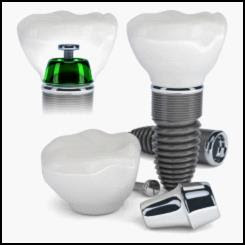
Dental implants are in effect artificial, freestanding tooth roots and they are constructed from the incredibly strong and lightweight metal titanium. The use of titanium metal came as a result of the breakthrough findings in the 1950’s by Swedish professor Per-Ingvar Brånemark and his clinical research team. It was discovered that titanium was able to support biological bonds with bone tissue in a process termed “osseointegration”. In addition to this quality, the fact that titanium metal is so tough, lightweight and does not rust or corrode, makes it the ideal candidate for assuming the function of a tooth root.

What Does Getting Dental Implants Involve?

Dental Implants - Dr Gasser

First things first, you will need to go visit your friendly Sun City dentist! Many people are wary of the dentist, but they are there to help you. Afterwards, you will most likely wonder why you delayed that visit in the first place! During your initial consultation, you will receive a careful clinical evaluation of your oral health in order to establish the cause and extent of the damage or decay related to your missing tooth/teeth. If your dentist finds that your tooth loss is a consequence of decay, dental caries or gum disease then the priority will be to treat the infection before continuing with teeth replacement.

Sun City Dentistry: The Surgery

Once your assessment and preparation has been complete, the implant site will be professionally cleaned and prepared to receive the implant. This is typically done on a different day, during a different appointment. The dentist will place a small titanium screw into the jawbone at the established missing tooth/teeth sites. While it takes several weeks and even months for osseointegration to take place, your dentist can supply you with a temporary ceramic tooth crown, so that you can carry on with your life as normal while you heal.

Sun City Dentistry: Recovery

While the bone tissue bonds with the titanium dental implant, it is imperative for you to rest your jaw as much as possible and keep from eating hard, crunchy or tough foods. The exact time it will take for the healing to successfully take place can vary from case to case. If you follow your surgeon’s instructions carefully, while staying healthy and enjoying a balanced diet, the process should take between one and three months.

Sun City Dentistry: Finishing Touch

During your follow-up appointments, your Sun City dentist will establish whether you’re healing nicely. When the jawbone is ready and your implants properly healed, you will be fitted with your new, permanent tooth crown, which has been made to function, look and feel like a natural tooth. You will immediately be able to return to your normal lifestyle and enjoy all your favorite foods with a beautiful new set of pearly whites!

Stay Tuned for Part 2!

Dental implants are by far the most effective, comprehensive and long-lasting solution to missing teeth. Join us for the second installment of this three-part article series, in which the Sun City dentist will be explaining their wonderful benefits.

Thursday, May 30, 2013

Essential Factors Contributing to a Healthy State of Dental Implants

There are numerous possible reasons why your tooth may be lost. For instance, negligence toward taking care of your oral health, decay of a tooth; and sometimes as a result of an accident or falling down; or even the side effect of medication in some cases can result in tooth loss. Undoubtedly no one likes to lose a tooth, but, having lost one, you would certainly look to replace your missing teeth with dental implants. Getting dental implants is equally as important as taking care of them post the implant surgery.

Sun City dental implants are being considered by an increasing number of patients as a great alternative to dentures and bridges, and once placed they are expected to last for a longer duration of time under proper care and maintenance. There are certain factors that contribute to the healthy state of your implants and make them last throughout their lifespan.

Useful advice by your Sun City dental surgeon for ensuring that an implant process is a success:

Listed below are the factors that can help keep your implants in a good state.

Sun City DentalSmoking: Smoking poses a lot of damaging affects on your overall health. It can also prove to have a detrimental impact to your dental implants, as well; particularly, in the time period on either side of undergoing the implant surgery - pre and post. Thus, your dentist will recommend that you at least quit smoking during this period of treatment. By ceasing to smoke, it will permit better blood flow around the area where the implant is to be inserted. Thus, in turn, it will ensure more oxygen supply to that area and will help the implant area to heal more quickly. Continuing a smoking habit can increase the chances of infection of the gums that will further deter the implant procedure from taking place smoothly.

Dental Implants - Dr. GasserDrinking: A glass of beer or wine might be a good idea, but if you drink more, it will pose a high degree of risk similar to a smoking habit. Heavy drinking is associated with the increase in the risk of mouth cancers and various other diseases or infections. All these ailments have the tendency to lower the overall health of the mouth and gums, thereby, escalating the prospective risk for the implant treatment.

Patience: Once the implant has been inserted, there will be a period of time before the crown is attached to the abutment in most cases. This is necessary for the process of osseointegration (bonding) to take place. Thus, at this point in time, the implant is not as strong and you are required to take care while eating so that no strain is put on the implants. You have to show a lot of patience and eat soft foods and intake liquid foods for a short time after the procedure.

Once you get your implants and the bonding process is complete, you might tend to return to your previous smoking and drinking habits, however, you must remember that even though the dental implants may not be at immediate risk, these factors will still contribute to poorer oral health and may even therefore affect the longevity of your implants.