Showing posts with label Dental implants Glendale. Show all posts

Tuesday, August 11, 2015

Dental Implant Surgeons Address the Gum Disease Scourge Affecting So Many Glendale AZ Residents, PART 2

In this four-part article series, a panel of dental implant surgeon provides us with an in-depth understanding of gum disease, which is one of the most common illnesses affecting American society today. 


Welcome to the second installment of this four-part article series on gum disease and the considerable problems it causes for those unfortunate Glendale residents who may have it. Previously, in Part 1 of the series, we took a look at the key symptoms of gum disease, the main ones being gum inflammation, swelling and bleeding and bad breath.

“Untreated gum disease will eventually lead to tooth loss,” warned our panel of dental implant surgeons in Glendale.

In Part 2, we’ll be shifting our attention to the very habits and lifestyles that leave us far more susceptible to developing gum disease. But first…

What Exactly IS Gum Disease?
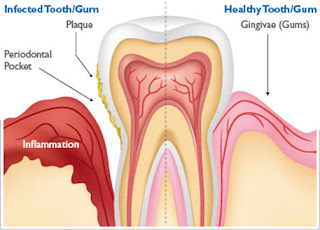
Glendale dental implant surgeon
Gum disease is a condition resulting from a chronic bacterial infection of the gums. It begins as a mild infection called “gingivitis,” which typically presents as slightly puffy and inflamed gums, as well as bad breath. With persistent bad habits, such as smoking, a poor diet, heavy alcohol consumption and/or poor oral hygiene, the infection can become more severe.

“Oral bacteria consume the sugars we introduce to our mouths and produce acidic by-products that erode away our dental enamel and irritate the gums,” explains a Glendale dental implant surgeon. “This is how cavities and gum inflammation are caused and it’s precisely why regular brushing and flossing are so important.

“However, as the infection is allowed to progress, the bacteria can penetrate into the snug spaces between the teeth and the gums, where no amount of brushing can eliminate them. Here, they form deep periodontal pockets of infection that can ultimately destroy the ligaments and other connective tissues that keep the teeth in place, which is why untreated gum disease leads to tooth loss. It’s at this advanced stage that the disease becomes known as “periodontitis”.”

The Top Causes of Gum Disease

And so, to recap what was discussed in the previous section, gum disease is typically caused by one or more of the following factors:

•    Poor oral hygiene: Not brushing or flossing thoroughly and/or frequently enough and not seeing the oral hygienist for a professional clean at least twice per year.

•    Tobacco use:
Chewing and smoking tobacco irritate the gums and encourage the growth of bacteria that lead to gum disease.

•    A bad diet high in sugar: Oral bacteria are fuelled by sugar, so if you have a diet that is packed with sugar and simple carbohydrates, you will be at a greater risk of tooth decay and gum disease.

•    Genetics: “Unfortunately this is not something you can do much about,” say Glendale dental implant surgeons. “If you are genetically predisposed to having gum problems and/or if you are male, you will have to up your oral hygiene routine and be stricter on your diet in order to prevent yourself from developing gum disease.”

•    Alcohol consumption:
Alcoholic beverages tend to be acidic and packed with sugar, which is bad enough for your teeth. Couple that with the dehydrating effects of alcohol and the unhealthy eating that tends to come hand-in-hand with a heavy night out and you’ve got a recipe for gum disease. Moderate your intake.

•    Certain medications: If you’re on chronic medications for depression, heart disease or allergies and if you’ve noticed that these medications tend to give you “dry mouth,” speak to your dentist about it. Saliva is important in fighting the bad bacteria in the mouth and so a deficit of it can leave you more vulnerable to gum disease.

•    Hormonal fluctuations: “During puberty, menopause and pregnancy, your hormones tend to be all over the place and this can leave you more susceptible to gum problems,” explains one dental implant surgeon in Glendale. “Make sure you visit your dentist regularly during these times and keep up the healthy eating and good home oral hygiene!”

Stay Tuned for Part 3

To find out more about gum disease and why it poses such a health risk to Glendale residents, stay tuned for the third installment of this four-part article series.

Monday, July 21, 2014

Brushing Your Teeth the Correct Way part 2

The average person does not brush their teeth to the full extent that they should. This article seeks to inform those people of the proper techniques for brushing.

Growing up children learn a hundred different ways to brush their teeth.  Everything from brushing hard three times a day to brushing for as long as your favorite song.  Most of the tricks we learned as children are wrong and some may cause more harm than good. Not brushing the right way has negative effects like teeth loss where you’ll need cosmetic dentistry in Arizona to correct your smile.

Length and Quantity

Most of us know that we should brush our teeth at least twice a day maybe a third time if they feel extra icky.  If you’ve been following this rule then you’re off to a good start.  The next thing to focus on is how long to brush.

Usually people exaggerate how long they bush their teeth or simply think it is longer than how long they truly do brush.  A minute suffices, but length is relative to how good of a job you’ve done.  It’s like writing a term paper without page requirements where they say to write until your point has been made.  Brush your teeth until you’re positive that everywhere got clean.

Cleaning System

This is where it gets challenging.  Everything from rotation, angles, and being thorough can affect whether the teeth are truly clean or not.  First this back and forth motion that almost everyone is use to, it isn’t useless but that isn’t the recommended way.

Those lovely motorized brushes have it right with the circular spinning.  The circular motion is what will lift the plague and buildup off your teeth and cover more areas at the same time.  Another thing to remember is to hold the brush at an angle as if to clean underneath the gums.

The gums is where a lot of the bacteria will build up and can cause gum disease if not properly cleaned.  This leads to bone deterioration and cause increase the need for dental implants in Glendale, AZ. Also using a rough toothbrush or applying too much pressure can irritate the gums which is just as bad for them.

Be Precise

Most doctors recommend brushing in an order so as not to forget a section of your mouth.  Start with one side and work your way over before cleaning your tongue or getting sidetracked. As Americans most people use a larger quantity of toothpaste then necessary. This won’t negatively affect your oral hygiene, but it’s wasteful and why not help out planet earth.

Bacteria Be Gone

One of the most common mistakes is changing out the brush or brush head often enough.  A lot of us are guilty of keeping a toothbrush around even though the gap between the two sides of the bristles is wider than the Grand Canyon.  That brush is not doing you any favors and has more bacteria built up on it than people realize.  It is recommended to change out every three months or so.

If all of this is too much to remember then investing in an electric toothbrush will cut out half of the brainpower. You won’t have to remember how hard to brush or the circular motion.  They allow you to just angle the brush and remember to clean everywhere.  Good luck keeping that mouth healthy and happy – you can also always consider Cosmetic Dentistry Arizona to further improve your smile.

Friday, June 13, 2014

Do dental implants fail?

If you are planning to get dental implants, you should know that there is a risk of failure of the implants. Though implants are successful in about 90-95% cases, there is approximately a 5% chance of the implant failing. Learn about the factors that determine implant failure.

Why do dental implants fail?

The success of a tooth implant, to a large extent, depends on the skill of the dentist who is performing the implant procedure. If the dentist doesn’t possess adequate knowledge or he lacks the expertise in performing the procedure, the risk of dental implant failure increases. Dental implants in Glendale can fail immediately after the procedure is completed or within a few months or years.

The factors that cause immediate failure of the tooth implant are excessive heating of the bone at the time of the implant surgery, using contaminated implants, positioning of the dental implant pin at the wrong position, putting too much force when placing the implant, or a problem with the quality of the bone structure.

Other important factors that lead to tooth implant failure is poor oral hygiene and practice. Dental implants need good care and maintenance to make them last for years. People who do not brush their tooth implants and who forget to floss often encounter problems with their implants. This is because poor oral hygiene results in gum disease and other oral health problems which affect the gums, tooth structure, and bones that hold the implants, as well as natural teeth. Gum disease, for instance, makes the gums weak which cause dental implant to become loose and fall out eventually.

Poor compliance with post-operative instructions also account for dental implant failure. Usually, patients are advised to use a liquid or semi-liquid diet for a few days following the dental implant surgery. They are asked not to chew anything hard with their implants right after the surgery. Dental implants take time to heal and to firmly settle down into the jawbone. If too much pressure is applied onto the implants soon after the surgery, implants become loose and they do not heal properly.


Smoking also increases the risk of failure of the dental implants in Glendale. Smoking causes plaque and tartar to build up on the teeth which increase the growth of bacterial infections in the mouth, putting the dental implants and teeth under risk.

How to reduce the risk of tooth implant failure?

Well, the best way to assure the success of the tooth implant surgery is to choose the right dentist who specializes in performing dental implants treatments. You must look for someone who has several years of experience in performing the implant surgery. It is advisable to check the past record of the dentist and to talk to some of the past clients of the dentist to find out the quality of service that the dentist offers. If the dentist is qualified and he is skilled enough, he would have a list of happy and satisfied clients. Adhere to post-operative instructions and follow good oral hygiene.

Friday, March 1, 2013

Dental Implants Over Dentures

The effect of a fading bone from complete tooth loss entails distorted facial profiles, increased wrinkles around your mouth, and lost lip support. Nonetheless, the bone can be conserved if you say yes to dental implants for replacing your missing tooth roots.


Your teeth undergo much wear and tear during your lifetime. It’s easy to lose teeth in an accident from a sporting event or other unforeseen mishaps. However, most of the time, aging is the main cause of tooth loss. And when this happens, dentists often use a bridge or dentures to replace your broken or missing teeth. Nowadays, an increasing number of dentists are recommending and using dental implants owing to the fact that other teeth don’t have to be destroyed for placing the bridge and also it looks and feels more natural. It also succeeds in better replicating the normal tooth functions.

Dental implants Scottsdale basically uses a titanium post that replaces the natural root of your tooth. It is carefully implanted into the gum and jaw bone, which then, after a course of time, grows around the new post. Titanium is the preferred choice for implants due to its superior strength, and its ability to naturally attach with gums and teeth. On implanting a new post properly, an artificial tooth is then placed over that post. Implants are considered much stronger than bridges or caps, and demand the same routine maintenance regime as your regular teeth. You are just required to brush and floss them as you normally do. It further takes away the anxiety that you might feel with false teeth, because the dental implant is treated and acts just like your real tooth.

Dental Implants over Dentures

There are a number of reasons that will compel you to get the more natural looking dental implants Glendale. In situations where you already have a tooth missing and if you’re using a partial denture, a dental implant can prove to be a more natural looking replacement option. Moreover, chewing your food is usually easier with dental implants than with bridges.

As the implants look more natural, you are compelled to prefer the look. It lacks the same false feel of dentures, which are a common cause of complaints for those with dentures.

Dental Implants Scottsdale

Dentures are more likely to cause irritation and bleeding of your gums if they aren’t properly fitted. Another reason for the irritation with dentures can be shrinking of your gums anytime you lose your teeth. Since the dental implants are made specifically for your mouth and are placed in your jaw, they are more likely to be a lot more comfortable of an option than dentures.

Whilst dentures may be more affordable initially, you will end up paying more over the life of the product than you would with the dental implants. And, if you’ve only lost one tooth due to an accident or periodontal disease, an implant will work wonderfully without affecting the natural look of your other teeth.

Make sure to get proper consultation about the dental implants Scottsdale and their aftercare from your chosen dentist. You’ll surely find that the implants can give you a natural, brighter smile. Simply find out from your dentist if dental implants are the best solution for you - while keeping in mind that it is definitely the longest lasting one.

Thursday, July 19, 2012

Frequently Asked Questions About Dental Implants in Glendale, PART 3


"This four part article series answers some of the questions patients frequently ask about dental implants, how they compare to other teeth replacement technologies and the various benefits they afford."

In this article, the third installment of a four-part series, we shall continue to address more of your frequently asked questions about dental implants Glendale. Please refer to the first and second installments to read the answers to questions, such as, “What are dental implants?”, “Is there an age limit for dental implant procedures?”, “Who is qualified to place implants?” and “What affects the long-term success of dental implants in Glendale?”

FAQ# 8: Is the Surgery for the Placement of Dental Implants in Glendale Painful?

Dental implants Glendale
Dental Implants in Glendale, Answer: No. All dental implant procedures are performed under the affects of anesthesia (either local or general depending upon case complexity.) Patients also have the option for sedation, in case they suffer from anxiety or phobias associated with dental treatment. Over and above this, the availability of sophisticated computer imaging technology and X-raysenable implant dentists to accurately and intimately plan surgical procedures for the placement of dental implants in Glendale. As are sult, they can keep them as minimally invasive as possible, thus negating the need for multiple incisions and sutures. Since this is the primary source of operative and post-procedural pain and discomfort, patients really need not worry when going in to receive their dental implants in Glendale. While there is some discomfort during the healing process, this can quite effectively be managed with prescription pain-killers and in many cases, does not last for more than a few days.

FAQ# 9: How Long do I Need to Take Off From Work if I’m Receiving Dental Implants in Glendale?

Answer:Every patient is different. Some may prefer to spend a day or two taking it easy after having received dental implants in Glendale,while others return to work the very next day. According to the implant dentist, you will be able to return immediately to work. Just remember to adhere to the post-operative instructions for the care of your new teeth.

FAQ# 10: How Often do I Need to Return to the Dentist to Have my New Teeth Checked?

Answer: The healing process is crucial because it plays an integral role in determining the success of your dental implants in Glendale. Every three to four months, you will need to go to the dental hygienist(one specially trained in the maintenance of implants) to have your new teeth professionally cleaned, and to the implant dentist for thorough follow-up inspections. Maintaining a rigorous home oral hygiene routine will also help you keep your dental implants and natural teeth in fantastic condition for decades to come.

FAQ# 11: What can Dental Implants in Glendale do for me?

Dental implants

Answer:Dental implants in Glendale are recommended by dentists time and again for the following reasons:
  • They enable patients to smile with confidence
  • They enable patients to speak properly and without self-consciousness
  • They enable patients to eat all the foods they love, thus promoting better nutrition
  • They greatly improve self-esteem
  • Dental implants in Glendale offer a comfortable tooth replacement solution
  • They offer a fantastic aesthetic solution to missing teeth
  • They have an incredible lifespan of 20, 30 years and even longer if cared for properly.
Dental Implants in Glendale: Stay Tuned for More FAQs!

To read the answers to more of your frequently asked questions, stay tuned for the fourth and final installment of this four-part article series on dental implants in Glendale.